
We made an appointment, the date is approaching, and one question keeps coming up: what are we supposed to prepare, exactly? The short answer is that we don’t have anything to revise. However, having a few concrete reflexes before D-Day allows us to get much more out of that first session with the psychologist, and especially to avoid the frustration of leaving having forgotten half of what we wanted to say.
Check the practitioner’s credentials before the first therapy session
Before even preparing what we are going to say, it’s beneficial to check who we are going to talk to. A psychologist holds a protected title, backed by a university degree and a code of ethics. A psychotherapist or a “helping relationship practitioner” does not fall under the same regulatory framework.
Some signals should alert us from the first contact. Clinical psychologist David Masson, in an interview for Cerveau & Psycho, emphasizes the need to gather information before the first appointment: promises of quick “healing,” pressure to increase the number of sessions, or a narrative that isolates from loved ones are warning signs. Spotting them in advance allows us to interrupt potentially harmful follow-ups without having invested weeks.
Specifically, we can check the practitioner’s website, any publications on social media, or verify their ADELI or RPPS number. When preparing to see a psychologist for the first time, this verification takes ten minutes and already alleviates some anxiety.
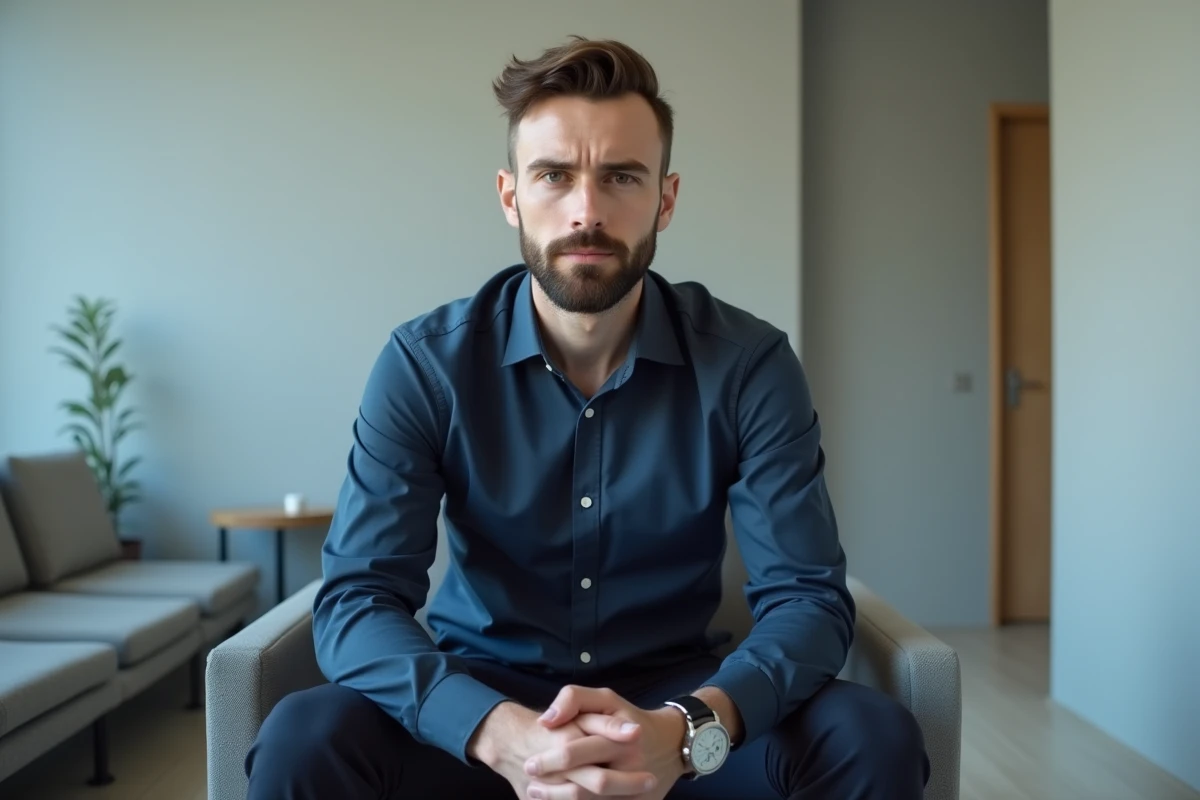
Psychologist reimbursement: anticipate costs to avoid stress on D-Day
We rarely think about it, but financial anxiety disrupts the session just as much as nervousness does. And the situation is less straightforward than we believe.
- A psychiatrist is reimbursed by Health Insurance within the coordinated care pathway, as they are a specialist doctor.
- A private psychologist is not typically reimbursed by Social Security, except under specific schemes (like the MonPsy scheme, under conditions set by the referring doctor).
- Some mutual insurance companies offer an annual package for sessions with a psychologist. The amount and number of covered sessions vary greatly from one contract to another.
Calling your mutual insurance company before the appointment to find out the level of coverage avoids unpleasant surprises at payment time. If the budget is tight, one can also turn to mental health centers (CMP), health houses, or university consultations, where sessions are free.
Preparing what to say to the psychologist: a concrete method
The classic scene: we arrive, the psychologist asks what brings us in, and silence ensues. Everything we had in mind fades away. Writing down two or three sentences on our phone or on paper before the session solves this problem in most cases.
We don’t need a complete narrative or a perfect chronology. What helps the practitioner is to understand the current situation and what triggered the approach. Three elements are enough to get started:
- The main reason: what led us to make the appointment (an event, a buildup, a persistent symptom).
- What we expect from therapy, even vaguely. “Sleep better,” “understand why I get so angry,” “stop procrastinating” are perfectly acceptable formulations.
- Any previous follow-ups: if we have already consulted a psychologist, a psychiatrist, or if we are on medication. The psychologist will adapt their approach accordingly.
The rest will come during the session. The practitioner asks questions, reformulates, prompts. Their job is precisely to structure what the patient is not yet able to articulate.
Should we prepare questions to ask the psychologist?
We can, and it’s even useful. Asking what therapeutic approach the practitioner uses (CBT, psychodynamic, systemic) is not out of place. The answer gives an idea of the method: concrete exercises between sessions, a focus on personal history, or a relational approach.
We can also ask about the usual duration of follow-ups, the recommended frequency, or what happens if the rapport doesn’t work. Changing psychologists after one or two sessions is perfectly normal and most practitioners say so themselves.

On the day of the appointment: what really changes the session
Arriving five to ten minutes early may seem trivial, but rushing to be on time puts the nervous system on alert, which complicates the exercise of calmly talking about oneself. If possible, also block a free slot after the session. The first consultation often stirs up things we hadn’t anticipated, and jumping straight into a work meeting or a stressful commute cancels out some of the benefits.
Regarding the duration of the session, feedback varies among practitioners, but the first consultation often lasts between 45 minutes and an hour. It serves both the psychologist (to understand the request, set the framework, assess if their approach is suitable) and the patient (to observe if the setting is comfortable, if trust is beginning to build).
One last point rarely mentioned: we are not obliged to say everything during the first session. The therapeutic alliance is built over several appointments. Sharing only what comes naturally, without forcing, produces better results than trying to unload everything at once. The most useful preparation remains to accept that this first session is a beginning, not a complete assessment.