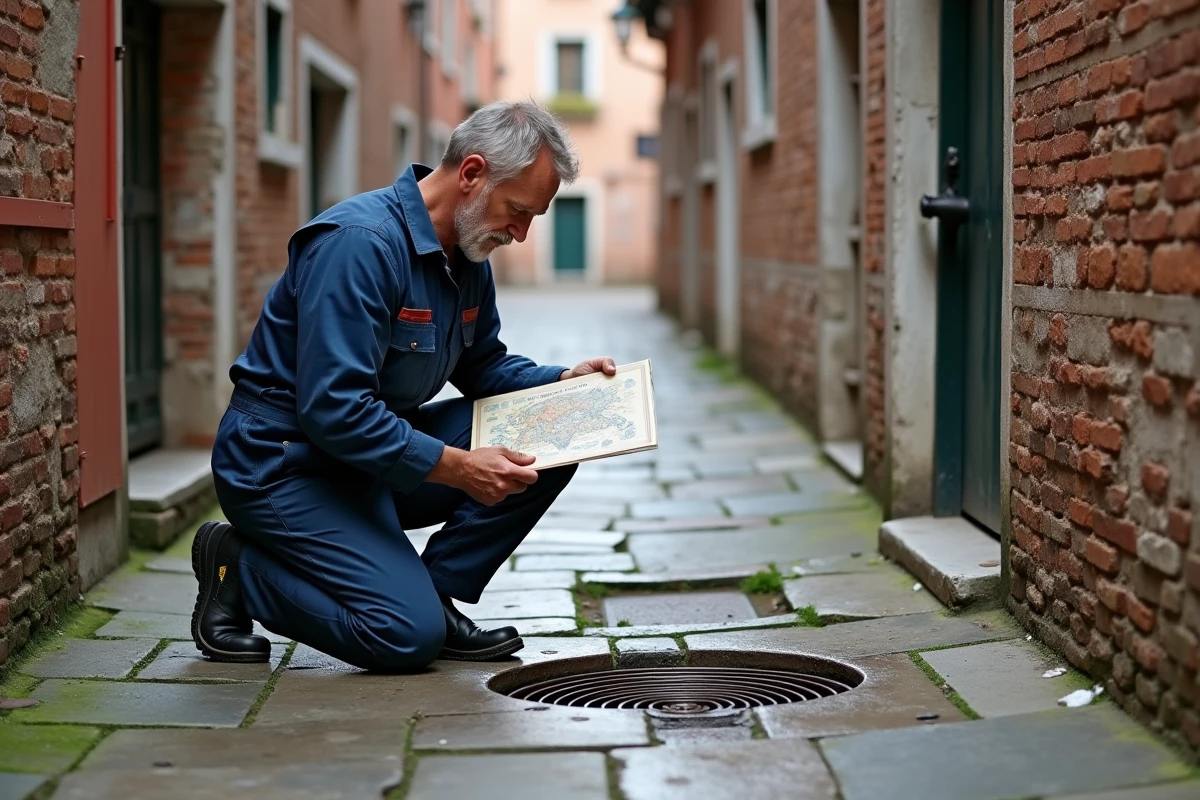
The Venetian paradox strikes immediately: no wastewater treatment plant comes into existence until the very end of the 20th century, despite narrow alleys, millions of footsteps, and a lagoon with precarious balances. In this city, the old houses send their wastewater directly into the canals, while some recent constructions are equipped with septic tanks or micro-stations, each subject to sharp technical rules and strictly regulated.
Italian law now prohibits any unfiltered discharge, but daily life relies on a mosaic of solutions, between remnants of the past and modernized equipment, depending on the street, the age of the building, or the last renovation. Venice walks a tightrope: persistent environmental risks, heated debates, discreet innovations, nothing is ever really fixed.
Venice and water: a millennia-old cohabitation shaped by ingenuity
Venice, an improbable archipelago set on the lagoon, has defied urban logic for over a millennium. Here, the city stretches across 118 islands, connected by more than 400 bridges, crossed by 117 canals. The Venetian lagoon, a fragile and living matrix, imposes a constant adaptation of infrastructures and uses on its inhabitants. The canals of Venice are not just simple thoroughfares for gondolas or vaporettos. They also form a complex, living, moving network where water evacuates, cleans, but also carries the traces of daily life.
The Republic of Venice, from its origins, founded its power on trade, but also on the art of making the most of water. Beneath St. Mark’s Square, the Doge’s Palace, or the Rialto Bridge, forests of wooden piles support the monuments. This architecture relies on moisture and waste management, conceived as early as the Middle Ages. The wells of Venice, crafted by the pozzèri, retained rainwater, filtered through layers of sand, gravel, and clay. This precious resource, ingeniously diverted, allowed the city to survive without running water.
Today, the sewage system in Venice extends this legacy. It combines ancient techniques and recent innovations, in a precarious balance between preservation requirements, tourist flows, and the daily life of residents. This model without a centralized sewer, where tides play the role of a natural regulator, raises questions and fascinates. To understand the secrets of this urban mechanism, dive into the analysis of waste evacuation in Venice: what really happens? – By Caroline and CO.
What are the secrets of the Venetian sewage system, between historical heritage and recent innovations?
Since its origins, Venice has relied on the decentralization of sanitation. The city does not have a centralized sewer network comparable to that of ancient Rome or other European metropolises. The wastewater from homes, businesses, and infrastructures first passes through individual or collective septic tanks, often equipped with a grease trap. These devices retain solid materials and fats, thus preventing their direct discharge into the canals.
The operation of the system relies on several complementary devices:
- Septic tanks: the first treatment barrier, often modernized.
- SBR and MBR: compact stations, adapted to urban tightness.
- SisTeMaV: centralized supervision of the entire decentralized network.
The ebb and flow of the tides remains the key to the system. Twice a day, the water rises, then recedes, carrying some of the wastewater toward the lagoon and the Adriatic. This natural mechanism, originally effective, reaches its limits in the face of tourist density and population growth. Venice adapts by integrating decentralized treatment stations of the SBR (Sequencing Batch Reactor) or MBR (Membrane Bioreactor) type, managed by SisTeMaV under the control of the Magistrato alle Acque. These solutions filter and purify gray and black water before discharge.
Unlike the Cloaca Maxima of Rome, Venice has chosen to multiply small devices adapted to the urban structure. This model, imposed by geography, blends heritage and adaptation, but it requires constant monitoring to cope with ecological and human pressures.
Current environmental challenges: issues, solutions, and discoveries on lagoon preservation
Venice must contend with accelerating threats. The rise in sea levels, fueled by climate change, is eroding the city. The ground subsidence, a phenomenon rooted in local history, has worsened with water pumping in the 20th century. The lagoon, which protects Venice, is losing its balance. The high tides, the acqua alta, invade St. Mark’s Square more often than before. The inhabitants of Venice see their environment transform, slowly but surely.
To respond to these attacks, the city relies on the MOSE system. These mobile barriers, erected at the entrance of the lagoon, rise during high tides to protect Venice from the floods. The technique, ambitious and costly, provokes debates and controversies. Its effectiveness, tested during recent floods, offers a respite but does not resolve the constant wear caused by overtourism and pollution. The shops and restaurants, essential to the local economy, operate at the pace of massive attendance, which gradually exhausts the infrastructures and accelerates the deterioration of the canals.
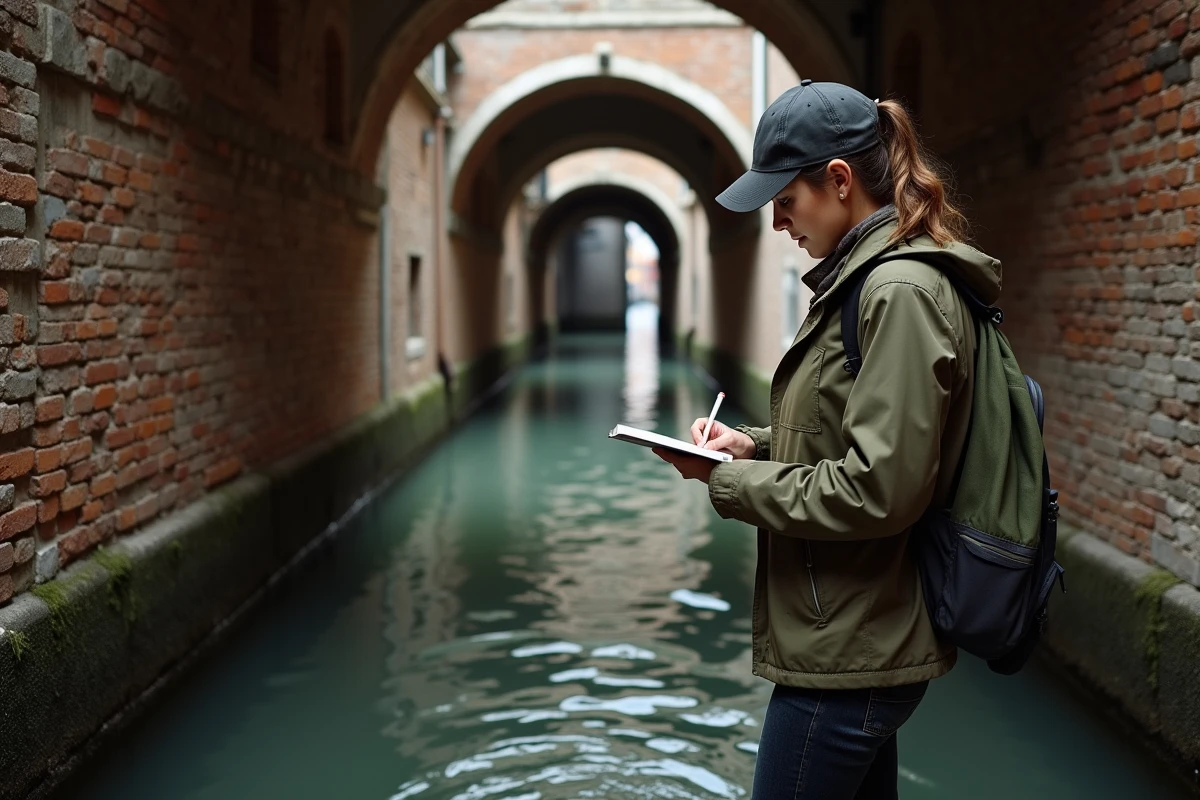
Researchers are also examining the action of anaerobic bacteria, which attack submerged wood. Their development, favored by pollution, threatens the stability of Venetian foundations. Preserving the Venetian lagoon therefore requires much more than a technical solution: it is necessary to regulate tourist influx, adapt construction, and support ecological innovation. Collective vigilance is essential, as here, the future is played out in the water and under the feet of those who cross it every day.