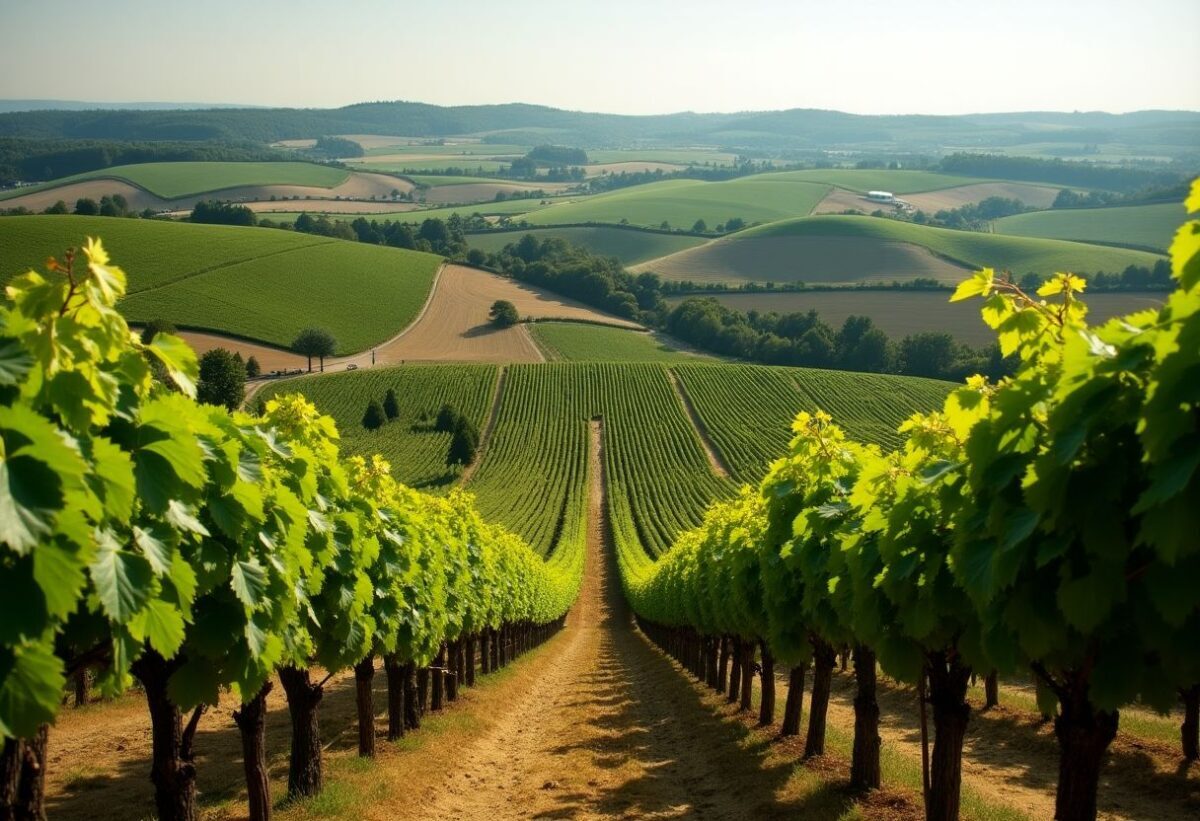
In the heart of the enchanting lands of Burgundy, a world-renowned wine region, red wine is elevated with grace and distinction. The complexity and diversity of these wines make them a subject of fascination for enthusiasts and connoisseurs alike. By exploring the nuances of the Burgundian terroirs, one discovers not only the richness of a heritage but also the subtle art of winemaking. The vineyards of Burgundy have traversed the centuries, building their reputation on a perfect balance between tradition and innovation. Burgundy does not merely produce wines; it tells a story with every sip, evoking the ancestral know-how and the soul of the winemakers who dedicate their lives to this noble endeavor.
The history and heritage of Burgundy red wine
The history of Burgundy red wine is as rich as the flavors it evokes. Since the Gallo-Roman era, the region has been a fertile ground for viticulture, influenced by various peoples and civilizations.
- Gallo-Roman era: The first vineyards were planted, marking the beginning of a long winemaking tradition.
- Middle Ages: Cistercian and Cluniac monks played a major role in the development and structuring of vineyards, laying the foundations for the climats that today define Burgundy red wine.
- Renaissance and French Revolution: These periods saw an increased recognition of the quality of Burgundy wines, as well as a more rigorous organization of the appellations.
- Contemporary era: Burgundy is now synonymous with prestige and quality on the global stage, with an emphasis on environmental respect and sustainable winemaking techniques.
The terroirs: a patchwork of flavors
Burgundy is a mosaic of terroirs, each offering unique characteristics that influence the wines produced. These terroirs, or climats, are meticulously defined parcels of vines that benefit from specific geological and climatic conditions.
The main factor behind these differences lies in the varied soil composition, ranging from chalk to limestone to clay. Stone plays an important role, and each climat benefits from its own sun exposure, thus influencing the ripeness of the grapes. Subtle differences in topography, such as altitude and slope, also have a significant impact on the vine.
These combined elements explain why Burgundy wines, although produced from the same grape variety, the Pinot Noir, can vary so spectacularly from one climat to another.
The emblematic grape varieties and their expression
Burgundy is famous for two main grape varieties: Pinot Noir for red wines and Chardonnay for whites. Here, we focus on Pinot Noir, which expresses itself differently depending on its growing location.
- Pinot Noir: Known for its delicate aromas of red fruits, it also reveals floral and spicy notes that evolve with age.
- Distinct climats: In Côte de Nuits, it unveils marked depth and tannic structure, while in Côte de Beaune, it offers unmatched finesse and elegance.
The mastery of this delicate grape variety relies on the precise know-how of winemakers, who adapt their cultivation and winemaking techniques to make the most of each parcel, thus respecting the purity of the fruit and the essence of the terroir.
Tasting: a savory ritual
Tasting a Burgundy red wine is an experience that engages all the senses. The first step is to observe the color, a brilliant and intense red, reflecting the youth and vitality of the wine.
Next, the nose is engaged to capture the complex aromas of red fruits, underbrush, and sometimes truffles, a sign of successful aging in the cellar. On the palate, the wine reveals its structure and balance, with silky tannins and a persistent finish.
Enthusiasts seek to pair these wines with dishes that enhance their aromas, such as red meats or sauced dishes, for a perfect harmony.