Mentioning the case of a wasp nest residing in a wall of a building can evoke a sense of concern for many people. Indeed, these flying insects, although they play an essential role in biodiversity, can pose a threat to humans due to their sometimes fearsome stings. It becomes imperative to find solutions to eliminate this wasp nest, while taking care to adopt the necessary precautions for this delicate intervention. Remember that exterminating these insects is a job for professionals due to the risks involved.
How to detect a wasp nest in a wall
Identifying the presence of a wasp nest in a wall can be a delicate yet crucial task to prevent potential risks. Be sure to know the warning signs. The frequent observation of constant comings and goings of wasps at a specific point on the wall is often indicative of their presence. Similarly, the appearance of small holes or cracks in the wall may indicate that they have found refuge inside.
Be sure to protect yourself during this identification to avoid putting yourself in danger. It is recommended to use binoculars to observe the nest without physically approaching it. Wasps can be aggressive and sting if they feel threatened.
In some cases, simple visual observation is not enough, and it becomes necessary to call a professional experienced in confirming the presence of the nest and taking appropriate measures for its elimination.
Also consider the severe allergic reactions in some individuals sensitive to wasp venom. If the nest is located near areas frequented by humans (garden, terrace), this significantly increases the potential risk.
To eliminate a wasp nest in a wall, several solutions are possible depending on the extent of the problem and environmental constraints:
• The chemical method involves using specific insecticides, sprayed directly on the nest. This method should be carried out with caution and preferably by a professional equipped with protective gear.
• Mechanical methods involve physically destroying the nest using a thermal lance or a specially designed vacuum cleaner for this intervention. These methods are effective but also require professional expertise.
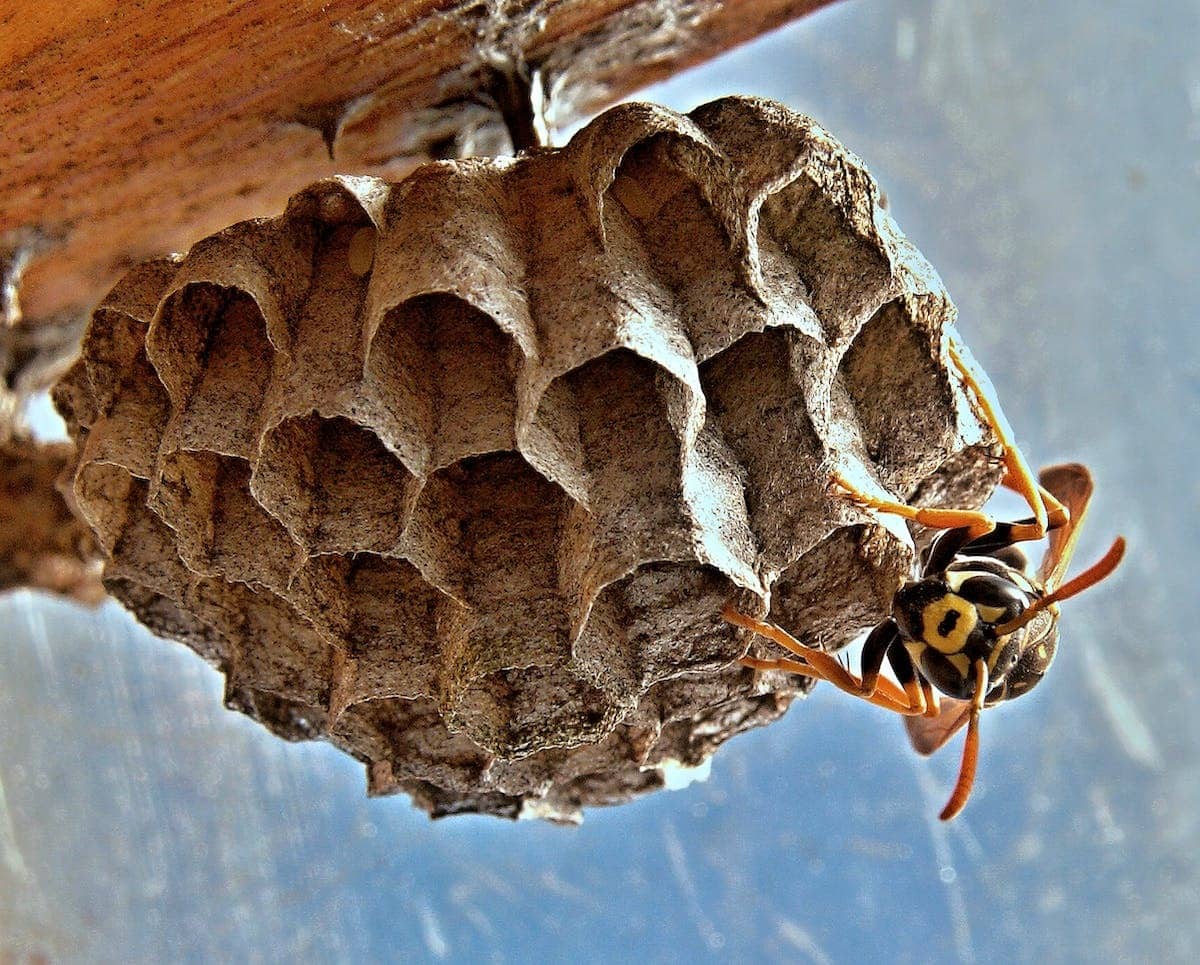
The risks of a wasp nest in a wall
You must eliminate other pests, which can pose a real threat to humans.
The main source of danger is their ability to sting. Wasps aggressively defend their nest and can attack as soon as they feel threatened. Their sting is often painful and can cause severe allergic reactions in some individuals sensitive to the venom of hymenopterans. It is therefore imperative to take all necessary precautions when considering eliminating a wasp nest.
Beyond the risk of stings, the proximity of the nest to areas frequented by humans also increases the risk of accidents. Imagine sitting quietly on your terrace when suddenly you are confronted with a noisy and aggressive swarm of wasps emerging from the wall right in front of you. Such a situation can not only cause great fright but also lead to domestic accidents if one panics or instinctively tries to flee quickly.
You should also consider the material damage that these social insects can inflict on architectural structures such as walls and ceilings. By digging their galleries to build their nest, they can significantly weaken the structure of the building, potentially leading to water infiltration, cracks, or even partial collapse if the problem is not addressed in a timely manner.
In the face of these potential dangers, you must exercise caution and take appropriate measures to eliminate a wasp nest in a wall. It is strongly recommended to call on an experienced professional who has the necessary skills to carry out this operation effectively and safely. They have the expertise required to assess the situation, choose the appropriate elimination method, and implement the necessary precautions to minimize the risks associated with this delicate intervention.
The presence of a wasp nest in a wall can present various dangers to both your health and safety. It is therefore essential to be aware of these risks before undertaking any action aimed at eliminating the nest. Calling on qualified professionals remains the best option to avoid any potentially dangerous incidents and ensure an effective intervention without compromising your own safety or that of other occupants of the building.
Eliminating a wasp nest in a wall: what solutions
When it comes to eliminating a wasp nest in a wall, several options are available. It should be noted that not all methods are suitable for every situation. The chosen method will depend on various factors such as the size of the nest, its location, and access to the site.
The first solution is to use insecticide aerosols. These products can be sprayed directly on the nest to kill the wasps present. It is important to carefully follow the instructions provided by the manufacturer to use these products safely. However, this method may require great precision and may be difficult to apply if the nest is located in a hard-to-reach place.
Another commonly used option is the use of a thermal suit. This method involves using a device that generates heat to eliminate the wasps. Gradually heating the nest allows for the killing of all the wasps inside without damaging the surrounding wall. This technique must be carried out with caution to avoid any risk related to fire spread or accidental burns.
In some cases, when the potential danger is not too high and you have the appropriate skills, you may opt for a more natural approach. One popular method involves using a homemade mixture primarily composed of hot water and liquid dish soap. This mixture can be sprayed on the nest to suffocate the wasps. It should be noted that this method is not always effective and may require several applications.
If none of the previous methods seem suitable for your situation or if you prefer to leave this work to experts, calling on a pest control professional remains a safe and reliable option. These professionals have the knowledge, specialized equipment, and skills necessary to safely eliminate a wasp nest in a wall. They can also advise you on preventive measures to take to avoid any future problems with these unwanted insects.
Eliminating a wasp nest in a wall requires a thoughtful and cautious approach. It is important to understand the potential risks associated with this task as well as the different solutions available before deciding which method to use. Whatever your decision, always prioritize your safety and that of those around you by avoiding any action that could worsen the situation or cause unforeseen incidents.
Before intervening: precautions to take
Before you embark on the elimination of a wasp nest in a wall, certain precautions must be taken to ensure your safety and minimize risks. Here are some measures to take before intervening:
Equip yourself properly: Before any intervention, make sure to wear appropriate protective clothing. A special wasp-proof suit with an integrated hood is highly recommended to protect your body and face from potential stings.
Choose the right time: It is best to carry out the elimination of the nest early in the morning or late in the evening when the wasps are less active. At these times, they are generally calmer and gathered around the nest, which will facilitate the operation.
Assess the situation: Before intervening, take the time to carefully observe the nest from a safe distance to determine its exact size and accessibility. This will allow you to choose the method best suited to your needs.
Inform concerned parties: If you live in a community or if your house shares a wall with that of a neighbor, inform them of your intention to eliminate the nest so they can also take their own precautions to ensure their safety.
Close all possible entrances: Before even starting the elimination of the nest, make sure to close all doors and windows adjacent to the site as well as any other possible access points through which the wasps could escape. This will help prevent a potential invasion of your home.
Prepare an evacuation plan: Even when taking all necessary precautions, there is always a possibility that the wasps may become aggressive during the intervention. Make sure you know and plan a quick escape route in case you are attacked by these flying insects.
Use an additional protective device: In addition to protective clothing, it may be wise to use a wasp net or mosquito net around the perimeter of the nest to prevent any unexpected escape during the operation.
Be ready to react to stings: Despite all your precautions, there is always a risk of being stung by a wasp during the intervention. Have antihistamines and cold compresses on hand to relieve pain and potential swelling caused by stings.
By following these precautions, you will be better equipped to face the delicate task of eliminating a wasp nest in a wall. Remember that safety should always be your top priority throughout the process.
Natural methods for eliminating a wasp nest
Once all safety precautions have been taken, you may consider using natural methods to eliminate a wasp nest in a wall. These environmentally friendly approaches offer an alternative to potentially harmful chemical products for human health and biodiversity.
One of the most commonly used techniques is the wasp trap. There are different types of traps available on the market or that you can make yourself. They generally consist of a plastic bottle cut in half and filled with a sweet bait, such as syrup or fermented fruit juice. Wasps are attracted by the enticing smell, enter the bottle through a small hole, and cannot escape.
Another effective method is the use of a natural repellent spray. You can concoct your own repellent mixture by combining a few drops of essential oil of citronella, peppermint, or clove with water in a spray bottle. Spray this mixture around the nest and areas where wasps gather to discourage them.
For those seeking a less invasive solution, fire fumigation can be considered. This method involves burning dry herbs such as sage or rosemary near the nest to create dense smoke that repels the wasps. Be extremely careful when using fire and ensure you have the necessary permits if you live in a regulated area.
Essential oils can also be used to eliminate a wasp nest. Clove essential oil, for example, is known for its repellent effect on these insects. You can mix a few drops of essential oil with water in a spray bottle and spray the liquid directly on the nest or in areas where wasps are present.
Pyrethrum powder, derived from the flowers of the African chrysanthemum, can be an option to consider. This natural powder has insecticidal properties that kill wasps on contact. Sprinkle it generously around the nest following the precautions mentioned earlier.
You should note that while these methods are considered natural, they are not without risks and can still cause stings or trigger allergic reactions in some individuals sensitive to insect venoms. If you are unsure or if the nest is located in a hard-to-reach place, it is advisable to call a qualified professional to address this potentially dangerous issue.
Therefore, do not hesitate to adopt these natural methods with caution and vigilance to effectively eliminate a wasp nest while preserving the balance of our environment.
Calling a professional to eradicate a wasp nest
When all alternative methods have proven ineffective or inappropriate, consider calling a professional to safely eliminate a wasp nest in a wall. Pest control experts have the knowledge and experience necessary to handle this delicate situation.
Specialized expertise: Professionals trained in pest management know how to accurately identify the type of insect and assess the level of infestation. They can therefore propose a solution tailored to your specific problem.
Appropriate equipment: Experts have the tools and equipment necessary to access the nest, eliminate it effectively, and treat it properly to prevent any recurrence. Their personal protective equipment also ensures their safety during the intervention.
In-depth knowledge of chemical products: If necessary, professionals have access to powerful insecticides that are not available to the general public. They are well-versed in these products and know how to use them while minimizing environmental and health risks.
Sustainable solutions: In addition to physically removing the nest, experienced exterminators also look for the source of the problem to prevent it from happening again in the future. They can recommend additional preventive measures to protect your home from future infestations.
Maximum safety: Calling a professional avoids any potential danger associated with eliminating a wasp nest. Qualified personnel are trained to handle dangerous situations and have the necessary equipment to protect themselves from stings.