
Who is actually adopting the digital tools shaped by geek culture, and who is being left behind? The 2026 Digital Barometer (Crédoc for Arcep, survey conducted in June 2025) offers a nuanced answer: generative AI has become part of everyday life for writing and brainstorming, but respondents still favor traditional search engines.
This coexistence of tools, far from a sweeping technological replacement, reveals marked generational differences between young adults and seniors.
Generative AI and search engines: two digital habits that coexist
Geek culture has long celebrated early adoption of every new technology. The pattern is repeating with generative AI, but one finding in the 2026 Digital Barometer complicates the usual narrative: AI is used more for writing and generating ideas than for replacing information searches. Search engines remain the dominant tool for the latter.
The gap between generations is significant. Young adults report using AI much more frequently than older people. This divide goes beyond technical familiarity: it also affects how much people trust the answers these tools produce.
| Digital activity | Preferred tool (2026 Barometer) | Higher adoption among |
|---|---|---|
| Writing, brainstorming | Generative AI | Young adults |
| Finding information | Traditional search engine | All age groups |
This table sums up a point often missing from articles about geek trends: AI is only partially replacing digital tools, not replacing them across the board. Geek culture accelerates the spread of these technologies, but does not guarantee that everyone will adopt them equally.
Specialist publications regularly bring together analysis and first-hand accounts to track these trends through a geek-culture lens. https://www.nouslesgeeks.fr, for example, covers topics at the intersection of tech and popular culture.

The generational divide and geek culture: is AI widening the digital gap?
The idea that geek culture makes digital technology more accessible to everyone deserves closer scrutiny. The 2026 Digital Barometer points to a significant gap in AI adoption between young adults and older people. Three factors shape this divide.
- Technical familiarity: people who grew up with video games, forums, or coding are more likely to experiment with a chatbot or image generator. Seniors, even when connected, often stick to established activities such as messaging and web browsing.
- Frequency of use: for young adults, generative AI is becoming second nature for everyday tasks, such as rephrasing an email or summarizing a document. Among older people, use remains occasional or nonexistent.
- Trust: letting a tool write on your behalf requires a degree of cultural familiarity with automation. For decades, geek culture has made this idea feel normal through science fiction, video games, and computing. Without that background, skepticism persists.
Geek culture therefore has a dual effect. It fosters technological curiosity among those already immersed in its world, while leaving behind those without the same shared frame of reference.
Digital cultural habits: what long-term statistics reveal
Geek trends do not emerge in a cultural vacuum. The Ministry of Culture publishes Key Figures: Statistics on Culture and Communication 2025, and DEPS has produced a 2025 Barometer of Cultural Outings. These long-term statistical series help put the rise of digital activities into a broader context.
Online cultural activities have grown over several decades, not just since the arrival of AI or streaming. Video games, digital reading, and podcasts are part of a structural trend that geek culture has accompanied, but did not cause on its own.
Comparing data on cultural outings (cinema, performances, museums) with data on digital habits reveals a pattern of accumulation rather than replacement. The most connected audiences are not abandoning physical venues; they are doing both. This echoes what the 2026 Digital Barometer shows about AI and search engines: the two tools coexist rather than replace one another.
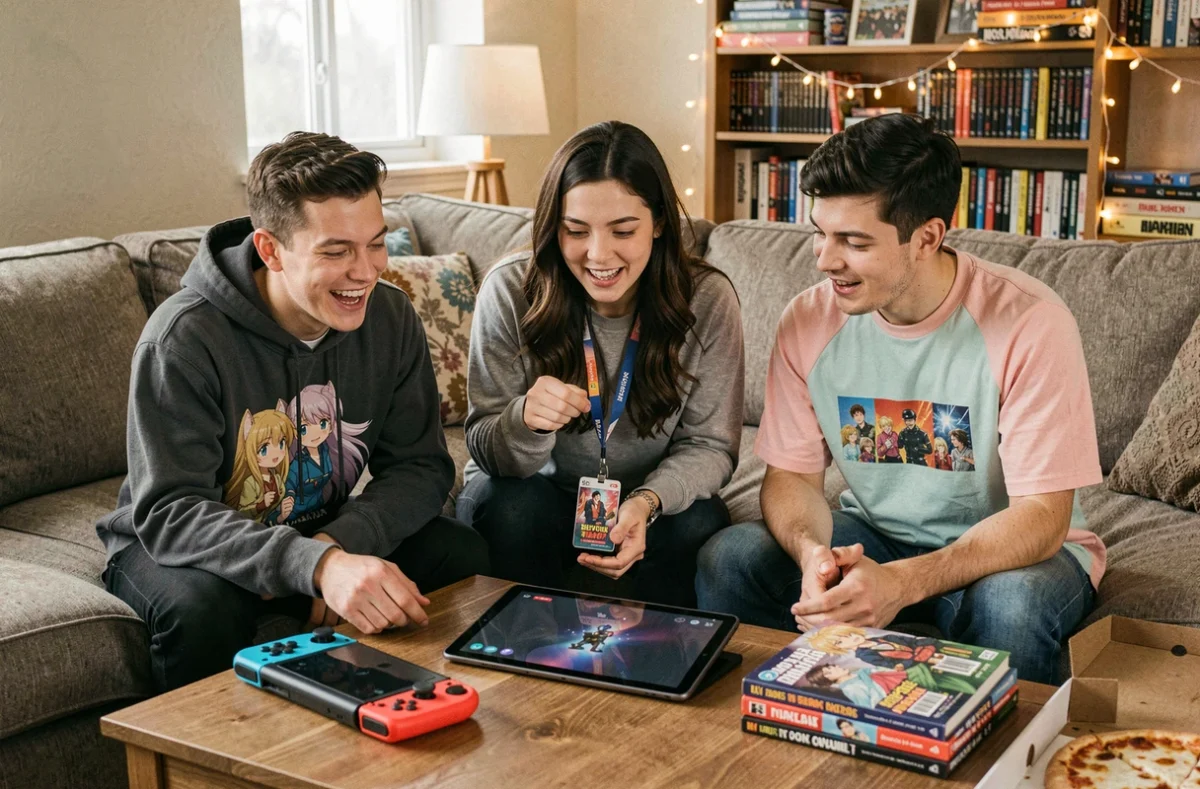
Video games, science fiction, and AI: the geek cultural foundation behind digital confidence
For decades, video games have been the main gateway into geek culture. They build habits—navigating interfaces, understanding progression systems, and solving problems—that can then be applied to other digital tools. Science fiction normalized the idea of interacting with artificial intelligence long before chatbots arrived on smartphones.
Not everyone shares this cultural foundation. Tech enthusiasts who have been reading science fiction since their teens approach a tool like ChatGPT with an existing frame of reference. For someone who has never played a video game or watched a science-fiction film, the same tool can seem opaque, even unsettling.
The most influential geek trend, then, is not any particular product or platform. It is an approach to technology shaped by decades of fiction and play. This outlook makes it easier to adopt each successive wave of technology, from personal computing to mobile technology and then generative AI.
The 2026 Digital Barometer data confirms that this outlook is not passed on automatically. The generational gap in AI adoption reflects less a problem of access than a lack of prior cultural familiarity. The question raised by today’s geek trends is not whether AI will become widespread, but who will have the cultural background to make the most of it—and who will remain a spectator to a transformation they cannot control.