You put on a baggy jean in the morning, feel good in it, and then you catch a glimpse of yourself in a mirror during the day: the silhouette seems to disappear under the fabric. The problem almost never comes from the jean itself, but from what you pair it with and how you adjust the volume to the rest of the outfit. Here are the concrete adjustments that change everything for wearing women’s baggy jeans with confidence.
Baggy jeans for everyday: balancing volume without over-structuring
The most common reflex is to offset the volume of the bottom with a fitted top. It works, but it’s not the only option, and it’s not always the most flattering. The real lever is the waist point and the length of the top, not just its fit.
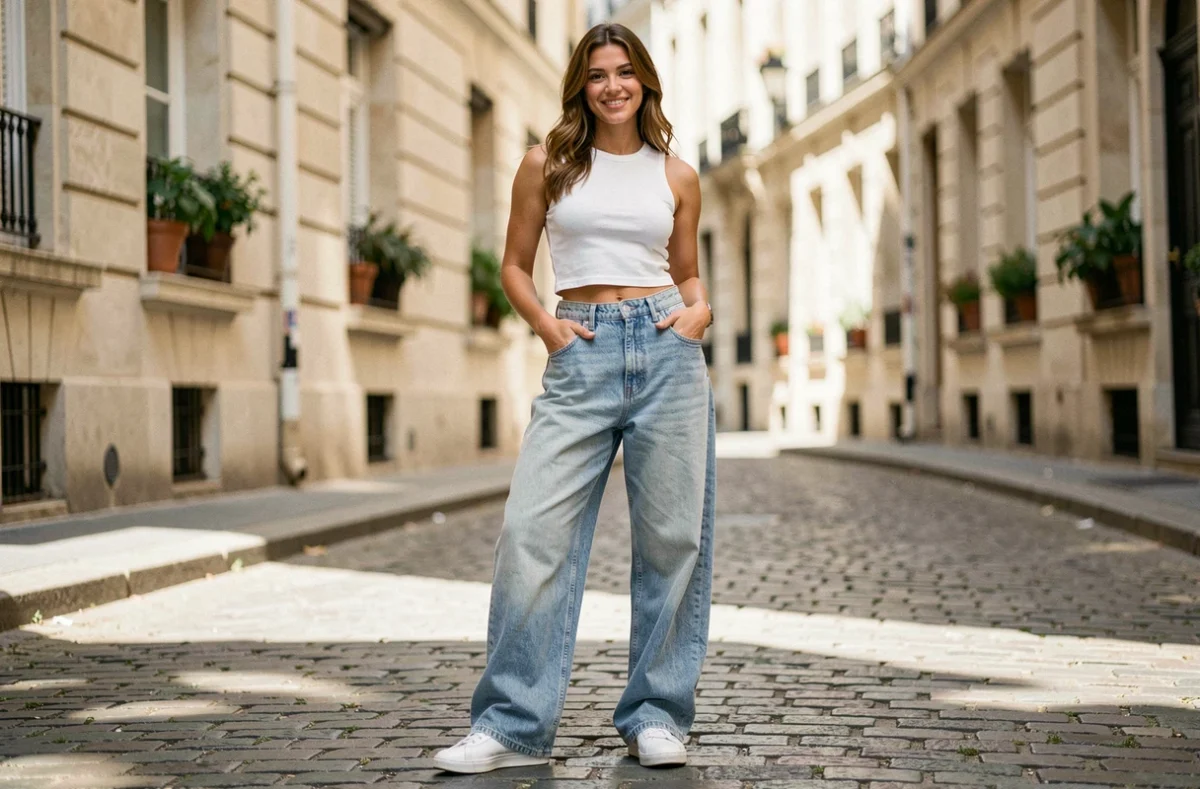
A top that stops at the waist or just below (crop top, knotted shirt, short sweater) creates a clear demarcation between the bust and the volume of the pants. You achieve a readable silhouette even with a slightly loose top.
On the other hand, a long top that falls over the hips erases the waist and gives the impression of a block of fabric. If you want a longer top, tuck it partially into the jean, only at the front: the famous “half-tuck” that effortlessly redefines the waistline.
To find out how to wear women’s baggy jeans on Mode For You, you can explore several combinations that go beyond just a crop top, including oversized shirts cinched with a belt or tailored vests worn directly on the skin.
The belt as a structuring tool
On a baggy, the belt serves more than just a decorative role. It keeps the jean at the right height and visually marks the separation between the bust and legs. Opt for a rigid model, made of leather or faux leather, with a discreet buckle. Woven belts or overly soft ones slip under the weight of the loose denim.
For a low rise, the belt should be tight enough so that the jean doesn’t slide down when you sit or bend over. One hole too many and the baggy turns into pants that fall: that’s the first misstep to avoid.
Raw or faded indigo denim: the choice of shade changes the outfit
Recent collections lean towards deep or raw indigo denims in loose cuts. The interest is concrete: a dark baggy jean looks immediately sharper than a light faded model. The contrast with a white, cream, or pastel top is enough to establish an outfit, without additional accessories.
Light faded denim remains valid for a relaxed summer look, paired with flat sandals and a tank top. The difference between the two comes down to intention: the raw leans towards dressed-up, the light towards casual chic. Both work, but you don’t wear them with the same shoes or in the same contexts.
Baggy jeans with structured pieces
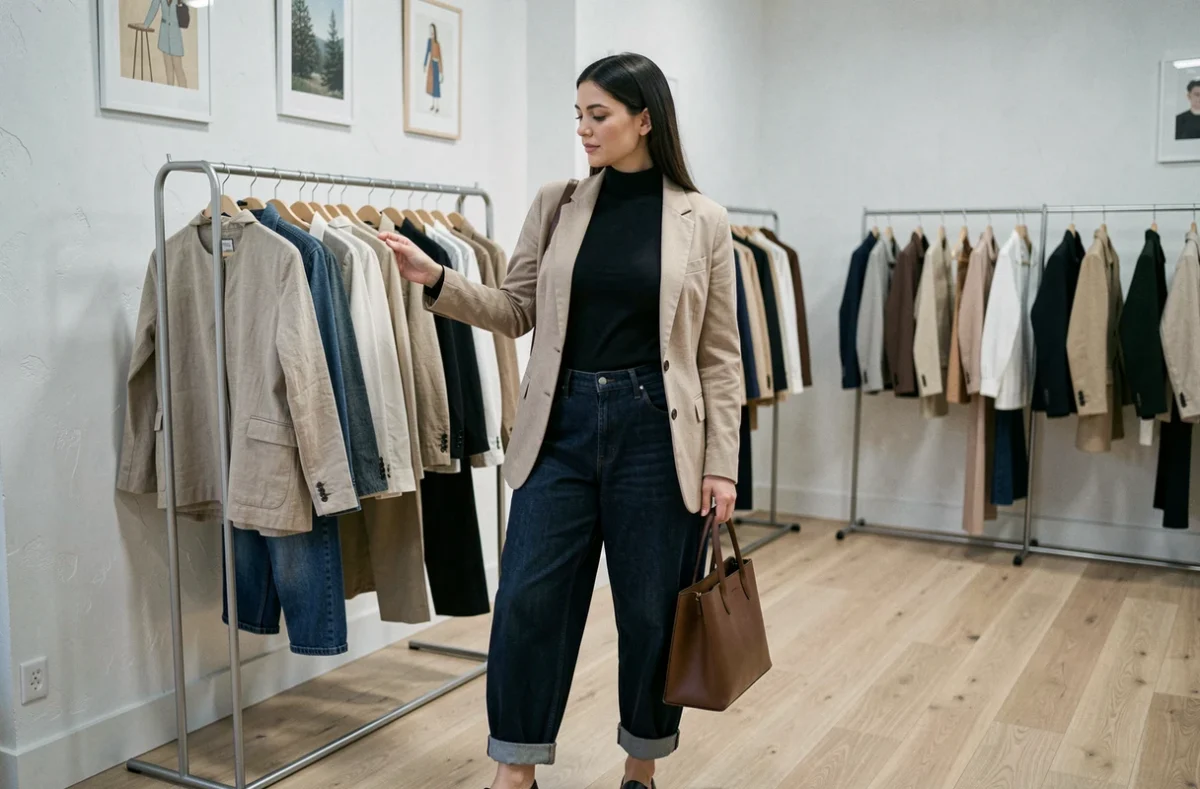
Fall-winter runways increasingly pair wide jeans with tailored jackets or fitted shirts. The baggy serves as a base for a dressed-up look, not just streetwear. An open-shouldered blazer worn over a simple t-shirt, with raw baggy jeans and loafers, results in a much more polished look than one might imagine.
This combination works because the contrast between the rigor of the top and the relaxation of the bottom creates an interesting visual tension. You’re neither in a suit nor in weekend wear, but in a middle ground that corresponds to the daily life of most women.
Shoes and hem: the adjustment that most looks miss
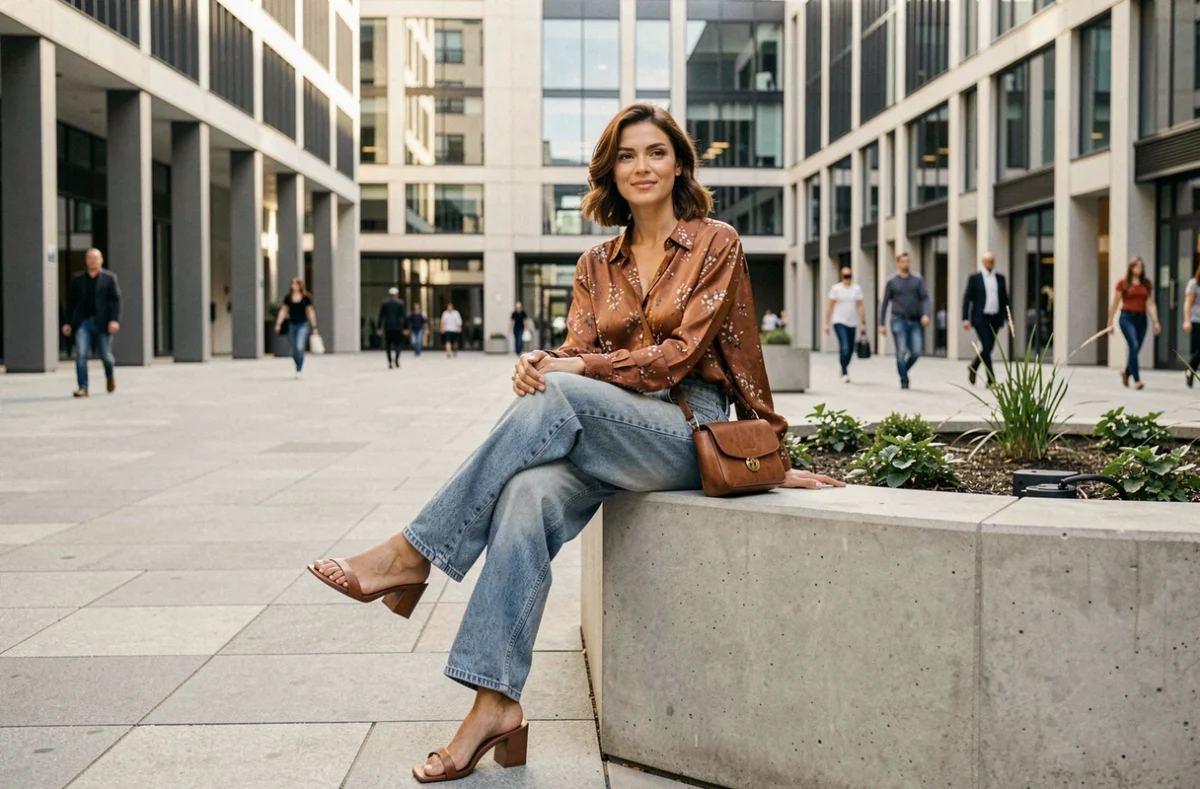
The length of the baggy in relation to the shoes is the most underestimated technical detail. A hem that drags on the ground wears out, gets dirty, and weighs down the silhouette. The hem should just brush the top of the shoe without wrinkling on the ground.
Daily combinations that work:
- Chunky sneakers with a hem that stops at the ankle, slightly rolled up if necessary. The volume of the sneaker balances that of the jean and avoids the “lost leg” effect.
- Loafers or ballet flats with raw or gray baggy jeans, clean hem without cuffs. The flat shoe elongates the step and maintains a sober look.
- Block-heeled ankle boots with the jean falling over them without excess fabric. The heel elevates the silhouette, which compensates for the volume of the pants for women who desire it.
- Flat sandals in summer, provided the baggy is cut shorter (cropped style) or rolled neatly. A long baggy over a thin sandal creates a disproportionate imbalance.
The simple rule: choose the shoes first, then adjust the length of the jean accordingly. Not the other way around. The same baggy doesn’t fall the same way over sneakers and heels, and adapting the hem to each pair avoids most missteps.
Concrete mistakes that give a neglected look
We’ve talked about what works. Here are the combinations that systematically pose problems with women’s baggy jeans:
- An oversized unbelted top with low-rise baggy jeans: no visual reference point, the silhouette drowns.
- Too thin shoes (stiletto heels, strappy sandals) under a very loose baggy: the foot looks tiny and the jean overwhelms the lower body.
- Light faded denim paired with a gray sweatshirt: the whole lacks contrast and produces a uniform effect, “laundry day”.
- Too many bulky accessories (large bag, XXL scarf, statement jewelry) worn simultaneously with the volume of the baggy: the outfit becomes noisy without a focal point.
The baggy trend coexists today with much more fitted cuts, including the return of skinny jeans on some runways. You choose the baggy for the comfort and style it brings, not because it’s the only silhouette of the moment. This freedom of choice is also what makes the current denim fashion more interesting to navigate.
Women’s baggy jeans don’t require a complete rethink of your wardrobe. A short or semi-tucked top, a rigid belt, shoes chosen before the hem, and a denim dark enough to structure the outfit: these four adjustments are enough to go from “too loose” to “perfectly mastered”.